Nearly 30% of food in the U.S. is never sold or eaten.
The food manufacturing sector accounted for a significant share of this waste in 2024, including food that is discarded, overpacked, or given away.
Turn Food Waste into Operational Value
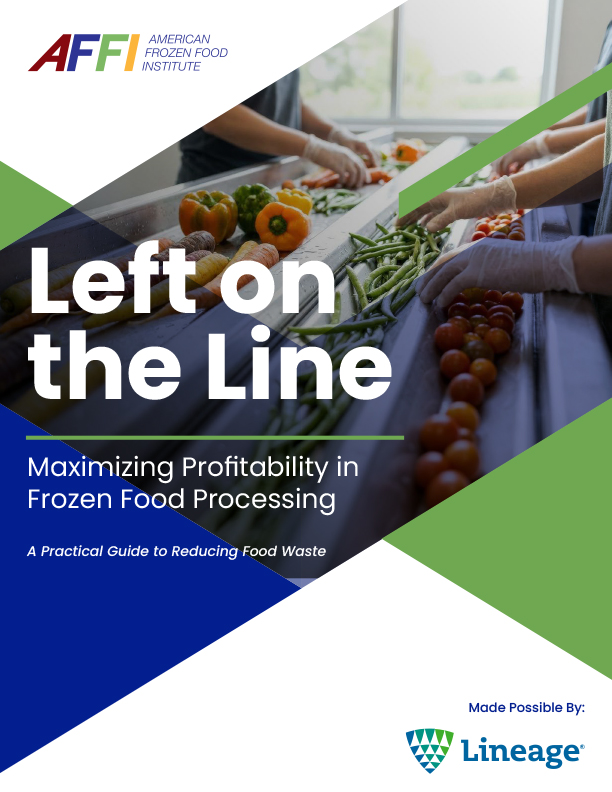
Food waste can result from interconnected decisions across product design, processing, handling, storage, and distribution. This new one-of-a-kind operational guide helps companies identify where food and organic material streams are being underutilized and take steps to prevent waste, improve efficiency, and uncover value.
Built for the People Who Influence Manufacturing Operations
This resource is designed for the individuals and teams who directly or indirectly influence how food moves through frozen food facilities and the broader supply chain.
Designed for companies of all sizes.
Companies can begin with readily available information and simple measurement techniques, then build food waste prevention into everyday operations over time.
13.1 million tons.
U.S. food manufacturers generated 13.1 million tons of wasted food in 2024, representing nearly one-fifth of food wasted nationally.
Making Better Use of Food Makes Business Sense
Wasted food represents more than a disposal expense. It can also reflect the loss of raw materials, labor, energy, storage, and other resources invested throughout production. Using the information in this guide to help prevent waste, companies can improve utilization, strengthen operational efficiency, and retain more product value.
Financial Value
Reduce input and operating costs, improve sell-through and margins, and strengthen operational efficiency.
Environmental Value
Make more efficient use of the land, water, energy, and other resources required to produce, process, store and transport food.
Community Value
Identify opportunities to redirect safe, edible surplus food to food banks, food rescue organizations, and communities in need.
AFFI extends a special thank you to Lineage for supporting the publication of this guide.
AFFI extends a special thank you to Lineage for supporting the publication of this guide.
For questions or more information about food waste, contact AFFI’s food safety team:
Dr. Sanjay Gummalla
Senior Vice President of Food Safety and Scientific Affairs
Dr. Sanjay Gummalla
Senior Vice President of Scientific Affairs
My favorite frozen foods are jalapeno poppers, taquitos, and tater tots.
Contact Sanjay:
Savana Everhart Nunn
Director, Food Safety and Scientific Affairs
Savana Everhart Nunn
Director, Food Safety and Scientific Affairs
My favorite frozen foods are pork gyoza, mac & cheese, and Dutch griddle cakes.
Contact Savana:
For questions or more information about food waste, contact AFFI’s food safety team:
Dr. Sanjay Gummalla
Senior Vice President of Food Safety and Scientific Affairs
Dr. Sanjay Gummalla
Senior Vice President of Scientific Affairs
My favorite frozen foods are jalapeno poppers, taquitos, and tater tots.
Contact Sanjay:
Savana Everhart Nunn
Director, Food Safety and Scientific Affairs
Savana Everhart Nunn
Director, Food Safety and Scientific Affairs
My favorite frozen foods are pork gyoza, mac & cheese, and Dutch griddle cakes.